Baking in Isolation

To Bake or not to Bake, that is the question. In this uncertain time which often seems apocalyptic-esque, one of Britain’s first loves, home baking, an activity compliant with self-isolation, appears incompatible with the empty shelves in supermarkets.

With The Great British Bake off establishing home baking as a popular pastime and creative outlet, in this national crisis baking could offer households a much needed respite from the harrowing news bulletins, bingeing of box sets, the watching of films, the completion of schoolwork or the stresses of working from home. I personally love to bake. However, conflicted by the need to conserve as much food in the cupboards for meals, I have recently exercised restraint, curbing my appetite to bake in favour of turning my unskilled hands to cookery, making roast dinners, curry and chili con carne with varying levels of success. Yet with the need for self-isolation and social distancing evident for the foreseeable future, is there a way to responsibly bake during this pandemic?

Certainly, it is clear that caution will have to be exercised when choosing what ingredients to use to bake with. Anything that can be eaten in its own right such as bananas and eggs or is needed for other meals such as butter, must be sparingly used or only included in baking after it has passed its best. For instance, when the whole banana has blackened.

It is in these situations when baking comes in to its own. It is a great way to use up food that would otherwise be wasted. For instance, if you place an egg, which is perhaps on the wrong side of fresh, in a jug of water and it sinks to the bottom, it is still okay to be used in baking.

It is inevitable that baking while food supply is short will require some ingenuity, making it impossible to stringently follow recipes. The following recipe is vastly versatile, yielding a deliciously luxurious banana bread every time no matter what you have in your food cupboards.

Banana Bread

Ingredients

1½ cups plain, gluten-free or self-raising (if using self-raising flour just put in ½ a teaspoon of baking soda)

1¼ teaspoons baking soda (can be substituted for baking powder although, baking soda is better)

¾ teaspoon salt

1 cup (packed) dark brown or light brown sugar, or demerara, caster, or granulated sugar (although brown is best if you have it)

⅓ cup mascarpone, yogurt, sour cream or buttermilk (alternatively you can make your own buttermilk by adding 1 tablespoon of lemon juice or vinegar to 1 cup of milk and letting it stand for 5 to 10 minutes. You can also make a vegan buttermilk by substituting the milk for a non-dairy alternative, like soy milk)

¼ cup butter, margarine or vegetable oil (margarine and butter are best but oil will work just as well)

2 large eggs (if you want to make this banana bread vegan simply replace the two eggs with an extra mashed banana, it might not rise quite as well but it will still taste delicious)

4 large very ripe bananas, mashed (roughly about 1½ cups) (I have made this banana bread very successfully before with three average sized bananas, the blacker the better)

1 cup milk chocolate chips or dark chocolate chips or a bit of both (if you don’t have any chocolate to hand you can omit this completely or replace with 1 cup of chopped walnuts or any nuts you have in the cupboard. You do not need to add any of these ingredients if you do not want to)

Method

  1. Preheat the oven to 170°c fan or 180ᵒc.  Using a little margarine, butter or oil grease and line a loaf tin with parchment paper or if you do not have any parchment simply dust the greased tin with a little flour. If you do not have a loaf tin this recipe also makes 12 excellent banana muffins. Simply line a 12-hole muffin tin with cupcake cases.
  2. Mix flour, baking soda, and salt in a medium bowl.
  3. Using a stand mixer or handheld electric mixer on medium to high speed, beat the sugar and butter or margarine in a large bowl until light and fluffy, for about 3 minutes (You can also cream these ingredients together with a wooden spoon but it might take a little longer to achieve the light and fluffy consistency). If you are using oil and sugar the mixture will not turn light and fluffy. Instead, you are looking for your mixture to be smooth with no lumps of sugar.
  4. Add the mascarpone, yogurt, sour cream, buttermilk or vegan alternative and mix until well incorporated.
  5. Add eggs one at a time, beating after each addition. Scrape down the sides and bottom of the bowl to ensure that all the mixture is blended together. If you are making a vegan banana bread obviously omit this step.
  6. Turn your speed to low if using an electric mixer and add the flour mixture. Mix with your mixer or fold the flour in by hand using a spatula until just combined.
  7.  Add the mashed bananas, not forgetting the extra one if you are making the vegan version and mix until just incorporated. The batter will curdle but don’t worry about this, it will not affect the bake or taste.
  8. Fold in chocolate or walnuts and mix until they are evenly distributed in the batter.
  9. Pour the batter into prepared loaf tin or spoon into cupcake cases.
  10. Sprinkle some sugar over the top of the loaf or muffins. This ensures a lovely crunchy top when the banana bread is baked. (I use demerara sugar for this but any would work)
  11. Bake the loaf tin for 60–65 minutes and the muffins for 20-25 minutes. In both instances test that the mixture is baked by inserting a skewer into the centre of the bread, if it comes out clean it is baked.
  12.  Transfer the loaf tin to a wire rack and let banana bread cool in the pan for 1 hour. Turn out bread and let cool completely before slicing.
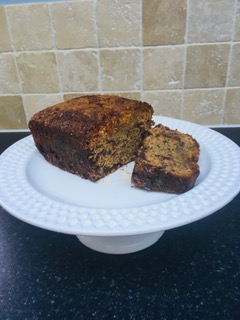
This recipe has been adapted from Bon Appetite, Best Banana Bread Recipe
https://www.bonappetit.com/recipe/banana-bread

A Trip to the House of Lords

Last week, I was fortunate enough to attended Policy Connect’s roundtable event held at the House of Lords, which was organised as part of the Higher Education Commission’s inquiry into the experience of disabled students.  As a disabled graduate, I welcome this inquiry as a much-needed opportunity to improve the provision of support for disabled students at University.

Whilst there have been improvements to equality legislation in recent decades, disabled students are often frustrated and let down by their university experience.   This inquiry, which is co-chaired by Lord David Blunkett, former Secretary of State for Education; Commission Chair Lord Norton; and Vice Chancellor of the University of Derby, Kathryn Mitchell, aims to advise government and the education sector on how to remove the barriers disabled students face and provide them with the support they need.

I sat on the roundtable with eight other student representatives discussing different aspects of university life, including ‘teaching and learning’ and ‘living and social’.  We identified some of the main challenges disabled students have to confront and highlighted good practices already instituted in some universities which allow for effective support.

During the event I emphasised the lack of practical support offered by university support staff and the poor planning of the accessible accommodation which was located all together in one place and thus counterintuitive to inclusion and equality. 

It was very enlightening to hear other disabled students share their experience of university. This event severed as a great reminder to me of how varied and diverse disabilities are and the wide range of support needed to help students succeed. However, there were definitely some commonalities when it came to the obstacles we had faced during our studies.       

The HE Commission will publicly report on its findings and recommendations in early 2020.

Great Britain’s Wheelchair Rugby Team Enter the European Championships as Favourites to Win.

I Interview Paralympian Aaron Phipps Ahead of this Important competition

Following a series of impressive performances, Great Britain’s wheelchair rugby squad are emerging as real contenders to bring home the Paralympic gold medal from Tokyo. Most recently, GB won the Four Nations Tournament in Lakeshore Alabama in May. This not only resulted in GB’s promotion from fifth to fourth in the IWRF (International Wheelchair Rugby Federation) world rankings but, also represented their impressive development as a team. GB remained composed and focused against the USA, Australia and Japan, teams who they had previously lost to only by the narrowest of margins in the last seconds of the game in early 2019.

GB’s next test will be in August at the 2019 IWRF European Championships in Vejle, Denmark. Great Britain enter this competition as the reigning European Champions and the favourites, following their recent victories over the USA and Australia, the top two teams in the world according to the IWRF. Yet with the gold and silver medal winners gaining automatic qualification for the 2020 Paralympic Games in Tokyo, this championship will be a fiercely contested tournament.

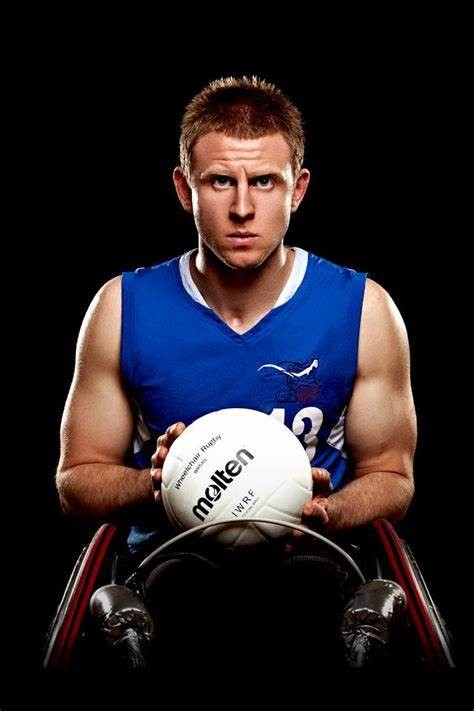
In the lead up to this important competition, I ask a few questions to my Solent Sharks teammate Aaron Phipps, one of the players selected for Great Britain’s squad at the European championships.

Photo taken from http://www.aaronphipps.com

How are you feeling about the forthcoming competition?

“Really good. It’s quite tough because the European championships is the qualifier for Tokyo 2020. So obviously every team will bring out their ‘big guns’, because everyone wants to get to the Paralympics.

Everyone is very pleased with the current GB team. We are in a really good position as we’ve just won the Four Nations Tournament in Alabama. I think we are going into the Euros with confidence but we can’t be complacent. It is a big competition; everyone is going to come out firing. At the same time, the level we are training at as a squad makes me really excited for our chances in this competition, which is quite a nice feeling.  I am not feeling too nervous. I am up for it and ready.

We are really settled as a team. We all train together and have been working on lots of stuff to make us even stronger as a unit. Everybody is really humble which creates a nice environment to train in.”

Which team do you think will prove to be the toughest competition?  

“Either France or Denmark. I think France are in a really good position, we have had some really good games with them in the past. They have a really strong coach so I am interested to see what tactics they use.  Denmark have a couple of really good high-pointers so they are going to be tough competition as well.”

What does a typical week of training look like?

“It really varies from week to week. I am quite often away with the GB team at Camps where we all come together and train as a squad. These camps are brutal. We have so many top players that every game you play in is just so tough, which is really good training. When I am away from these camps, I also do my independent training with Southampton Solent University. I have got an off day today, which is pretty unusual, but I am doing a lot of strength and conditioning work. I do lots of work in the gym and use a treadmill that I can get a wheelchair on. At the moment, building up to the Euros, I am in the middle of a very heavy training load. Sometimes I train up to ten times a week.”

Do you follow a particular diet when training to compete?

“I have to eat a very strict athlete’s diet. I am always counting my macros to make sure that I am on target, eating the right amount of protein and carbohydrates. I am in quite a fortunate position as I burn quite a few calories so in terms of eating, I just have to eat quite a lot, which I know sounds pretty amazing, but you just get fed up of eating. I am constantly having to drip feed food into my body. I always try to prepare snacks to take out with me.”

How do you mentally prepare for an international competition?

“That’s a big question. I have got a sports psychologist who does a lot of work with me. I have to work on ‘not caring’, which makes me play better. I know this seems unusual but I am a bit of a worrier, so I try not to care. When I don’t care, I don’t worry as much and if I don’t worry as much, I play better.”

What is your favourite thing about wheelchair rugby?

“The sheer brutality of it! It is so exciting and such an amazing sport. I just love the contact. There is nothing else like the physicality you get in the big international competitions. The hits are so big. It is just exciting when out of the corner of your eye, you see someone flying towards you and you think argh… this is not going to end well. It’s brilliant.”

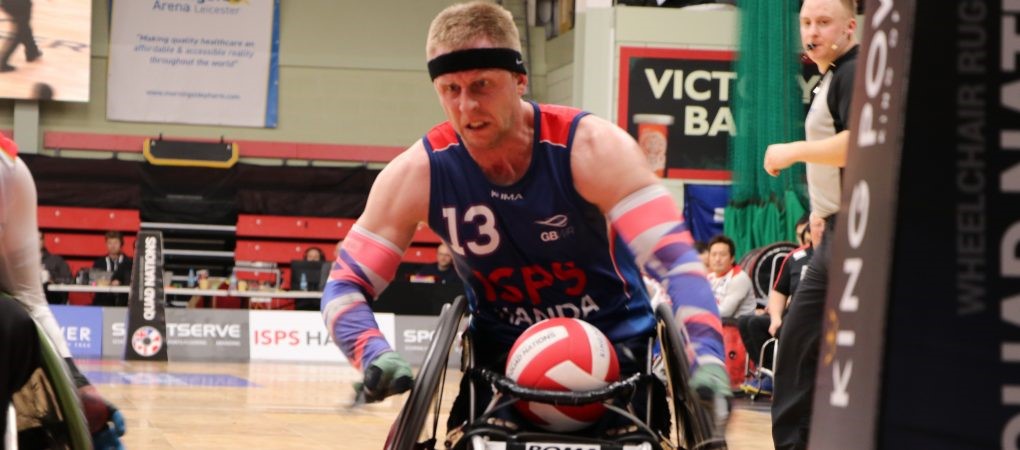
photo taken from http://www.gbwr.org.uk

My thanks and best wishes to my friend Aaron, I wish him and the rest of the GB squad great success in the forthcoming championships.

If You Didn’t Laugh, You’d Cry.

Although my disability is not invisible it can often be mistaken for the consequences of a skiing accident or a broken leg. When walking with my crutches I am often asked by well-meaning strangers “what have you done?”. When caught on an occasional bad day, this question can illicit feelings of insecurity and sorrow but most often it produces much hilarity.  People’s reactions when I inform them that I have cerebral palsy are priceless. Stumbling around awkwardly for an appropriate response, they often apologise or reply “well, you’re doing well” or more commonly simply smile and walk away, lamenting whatever part of their brain compelled them to ask a total stranger this question.  By far the funniest response to my declaration that I have CP was given by one lady who said “you have lovely hair though” like that makes up for my brain injury. I mean, she wasn’t wrong. I do have nice hair.  

Horse Riding As Therapy

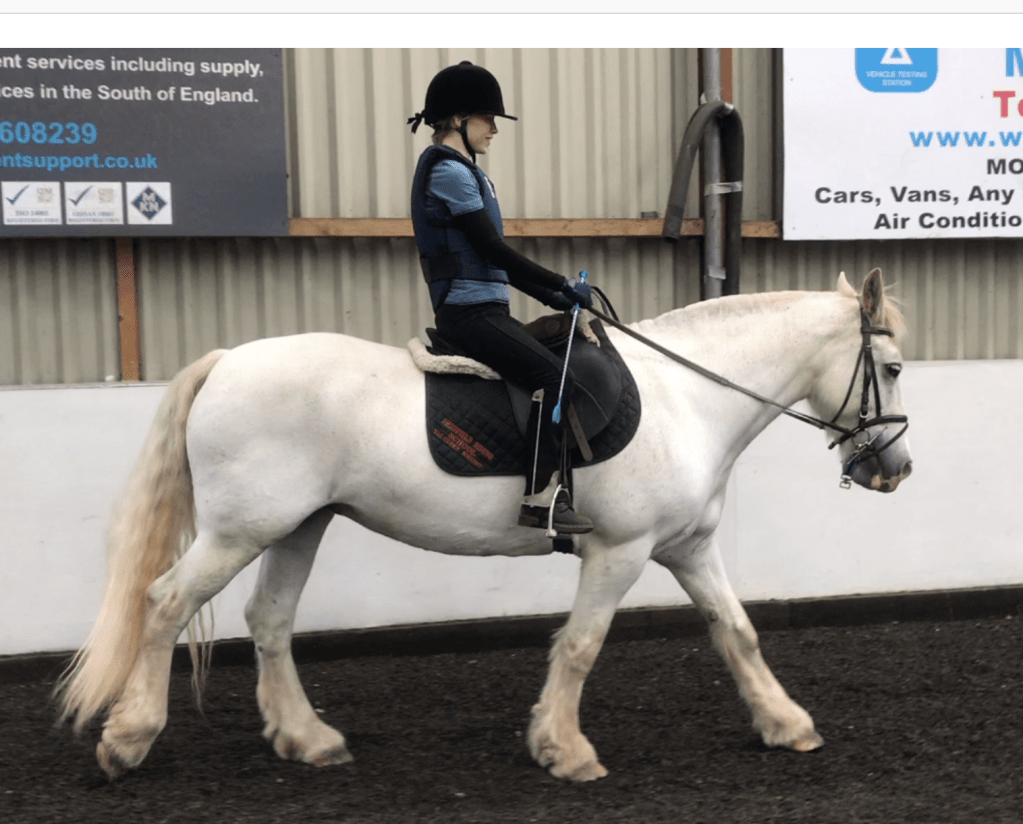
Horse riding works every muscle in the body. As a person with cerebral palsy, sitting on a horse gives me a great hip stretch and helps to strengthen and improve my core stability.  I have been going riding since the age of two and it has always been my favourite form of physiotherapy. Now 23, I continue to go riding once a week with my local RDA, (Riding for the Disabled Association).

 The RDAʼs motto “Enriching lives through Horses” is a true reflection of what the charity offers. I would recommend horse riding with the RDA to anyone who has additional needs. It is not only amazing in terms of providing exercise but also has a holistic effect upon the rider. Indeed, you cannot underestimate the power horses have to lift your spirits. Time spent with these majestic animals helps to shift one’s mind from a state of stress and worry to one of calm and tranquillity. Everyone at the RDA are friendly and understanding of each individual’s support needs. There are opportunities for riders to compete in a multitude of competition including dressage.

If you want to find your local RDA group click on the link below

https://www.rda.org.uk/rda-groups/

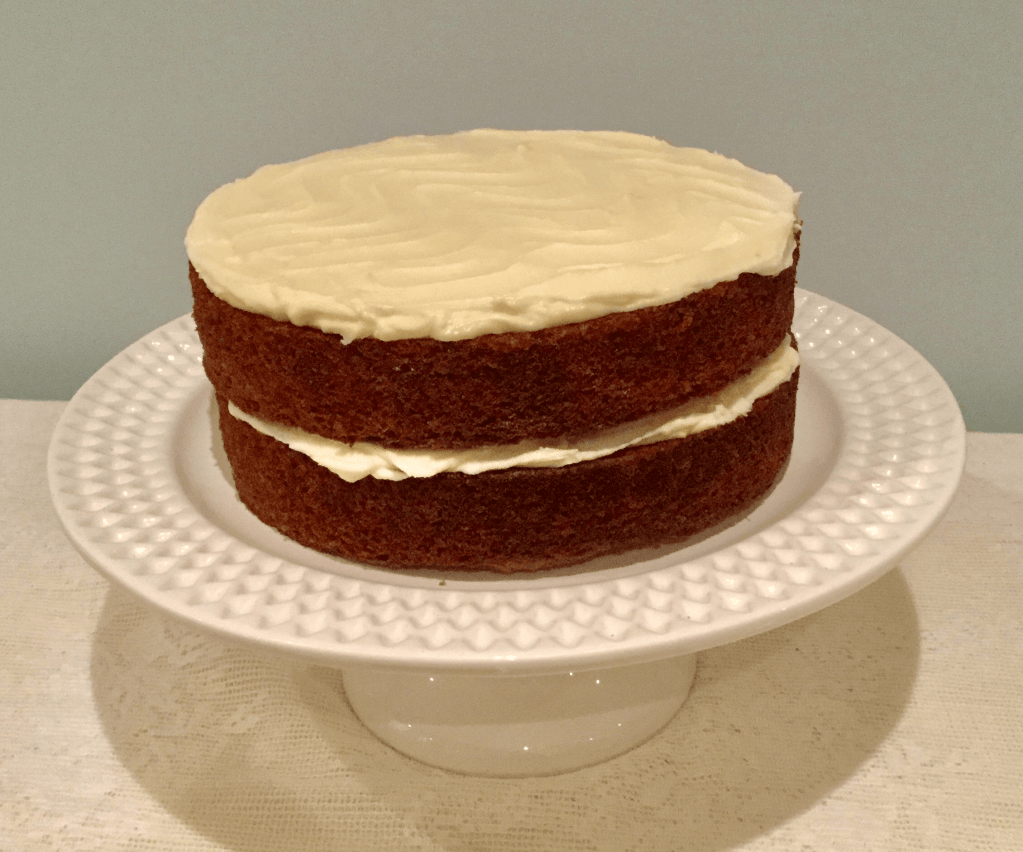
Simply the Best and Easiest Gluten-Free Carrot Cake Recipe Ever!!!

This no hassle recipe results in a light, moist and utterly delicious Carrot Cake.    

Ingredients

For the Cake:

  • 1 cup white sugar
  • ½ cup brown sugar, packed down
  • 2 cups gluten-free flour
  • 1½ teaspoons baking powder
  • 1 teaspoon baking soda
  • 1 tablespoon cinnamon
  • ½ cup desiccated coconut
  • 1 cup vegetable oil
  • 3 eggs
  • ½ cup natural yogurt
  • 1 tsp vanilla extract
  • 3 cups of grated carrots
  • 1 cup raisins

For the Icing:

  • ½ cup cream cheese, room temperature
  • ¼ cup butter, room temperature
  • 2 cup icing sugar

Method

Pre-heat the oven to 180ᵒc or 170ᵒc fan.

Line two 8inch round tins with baking parchment.

In a large bowl mix together the white and brown sugar, gluten-free flour, baking powder, baking soda, cinnamon and desiccated coconut.

Add the vegetable oil, eggs, yogurt, vanilla, grated carrots and raisins and whisk until all the ingredients are combined.

Pour the cake batter into the prepared tins and bake for 40-45 minutes.

Leave the cakes to cool in the tins for 10 -15 minutes then turn out onto a wire cooling rack to cool completely.

To make the cream cheese icing, simply place the butter and cream cheese in an electric mixer and beat until combined.

Then slowly add icing sugar whilst whisking after every addition

Spread the icing in between and on top of the cooled cakes to assemble the most delicious and stress-free Carrot cake ever.

This cake can be cut into 10 generous slices and will last about 7 days if stored in an air-tight container      

Enjoy X

Why I play wheelchair rugby

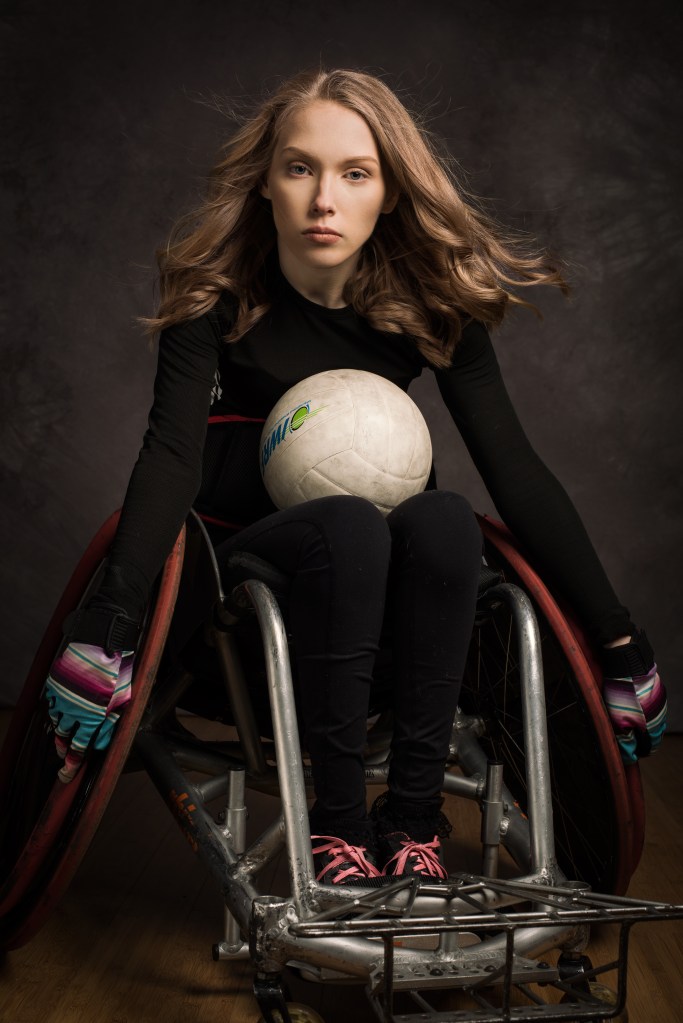
Harbouring little interest in the more sedate sports, I first sat in a rugby wheelchair at the tender age of 12 and since then I have loved the sport. Following several years break from the sport during my history degree, at 23 I’m now fully immersed in rugby training once more.

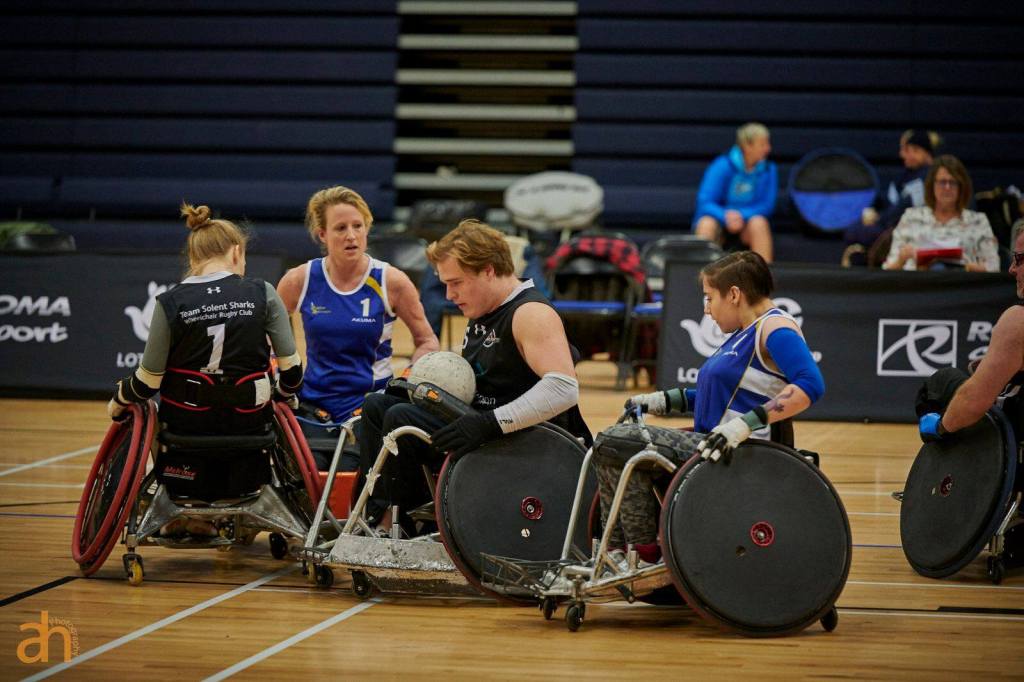
Whilst named Wheelchair rugby, the sport hardly resembles its namesake. Instead, it is a mixture of various different sports. There are no scrums, the game is played with a volleyball and passes can be directed forward.  

Originally created for those who were not able enough to play wheelchair basketball, the most enticing element of wheelchair rugby is that fact that regardless of their function, each player is valuable in their own right. Each game is divided into four with each quarter lasting eight minutes. Each side has a team of four players. It is one of the only sports wherein those with lower function are viewed in a positive light. Every player is given a numerical point value reflecting their function. These values range from 0.5 to 4.0. The lower your function, the lower your points. Each team of four can only add up to 8 points. I myself recently got reclassified this year as my function had deteriorated, a slightly sad reality, yet this reduction in my points was viewed as a legitimate cause for celebration for everyone in the team and myself.

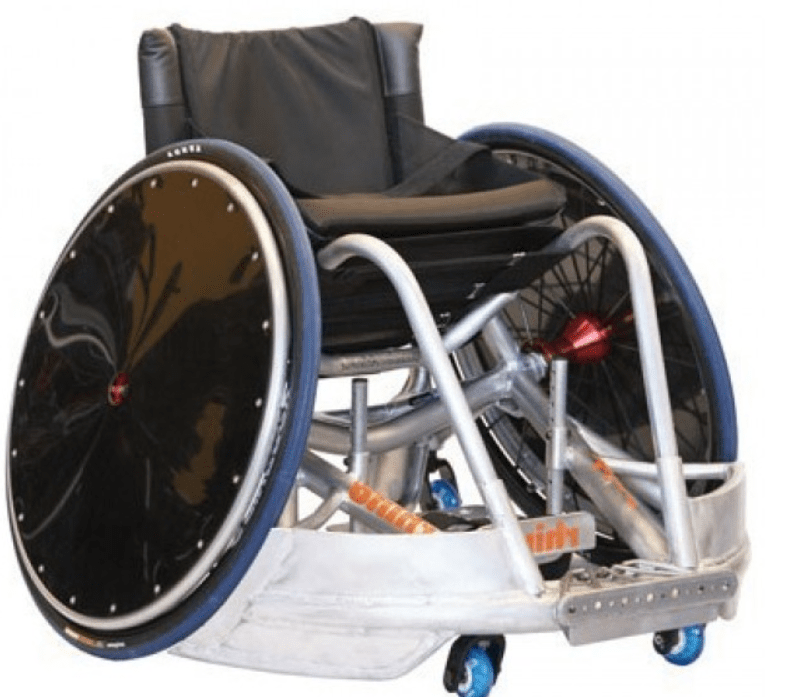
A Defensive Rugby Wheelchair

There are two types of rugby wheelchairs -defensive and offensive.

  • The defensive chairs have a protruding metal triangular pick. By wedging this pick into the space between the wheels of your opponent’s chair, the defensive player can stop them from moving.

A Offensive Rugby Wheelchair
  •  On the other hand, offensive chairs resemble Daleks in shape and are usually used by high point players as they are more agile.

The basic rules are as follows:

  • While ramming into other people’s chairs with your own is vital a skill needed to defend and attack your opponents, rugby is a noncontact sport. You cannot touch any of the other players.
  • The ball must be bounced or passed every 10 seconds
  • You have 12 seconds to get the ball out of your team’s half of the court
  • The ball must be in your possession when you roll over the try line to score
  • A team must score within 40 seconds of having possession of the ball
  • You cannot go over and back the halfway line with the ball.

This sport is fiercely competitive as well as loads of fun. It also constitutes a serious cardiovascular workout. The camaraderie wheelchair rugby provides is amazing. To be among your peer group partaking in an aggressive and relatively dangerous sport despite your disability is somewhat liberating. Indeed, the power sport has to change the status of your mind, body and soul constantly leaves me in a state of awe. This power was once more demonstrated to me last week. Following a hellish day wherein my new FES walking equipment [functional electrical stimulation], for which I had just paid a little under £2000 had electrocuted me, I found myself muttering the phrase I will not get electrocuted tomorrow as I raced around the court. I mean, if you need to find an outlet for your pent-up frustration, why not play a sport that was originally called Murder Ball. While I started this particular session lamenting the day that had just past, I soon forgot about my stress. 

If you’re interested in trying wheelchair rugby click on the link below to identify your local club https://gbwr.org.uk/find-a-club/

Gluten-Free Triple Chocolate Biscuits

These luxurious Chocolate treats are a hybrid between English biscuits and American cookies. They are simply scrumptious. Gooey on the inside and crispy on the outside, no one would guess that these biscuits are gluten-free. This recipe makes 30 medium sized biscuits or 20 very large ones.        

Ingredients

200g butter

300g caster sugar

1 large egg

275g gluten free flour mix

1 ¼ tsp Baking Powder 

75g cocoa powder

100g Milk Chocolate Chips

100g White Chocolate Chips

100g Dark Chocolate Chips

Method

Preheat your oven on to 200 degrees Celsius or 190 fan. Line two baking trays with parchment paper.

Simply put all the ingredients except from the Chocolate Chips into a large bowl and mix the ingredients together. I use my stand mixer to do this but an electric hand whisk or a wooden spoon would work just as well.

The resulting mixture takes a while to come together but resist the temptation to add any more liquid. When the mixture does form into a dough it is very stiff.

At this stage add the Chocolate Chips and stir them through the mixture until they are evenly distributed. I sometimes add bits of a broken up caramel chocolate bar into the mixture to make it extra indulgent.   

Form the dough into balls and place on your lined baking trays. Be sure not to place your balls of dough to close to each other as they will spread significantly in the oven. I normally place six balls of dough on each tray.

If you are making medium sized biscuits they will cook for 10 minutes if you are baking larger ones they will require one additional minute in the oven.

 When your biscuits have had their time in the oven, it is vital that you leave them on their hot baking tray for 2 to 5 minutes before attempting to move them onto cooling rack or into your mouth.

These Biscuits should last for a good week in an air tight container and are always a crowd pleaser with family and friends.

The Mollii Suit

A New Treatment for Spasticity and Other Motor Function Disorders

As an individual with spastic cerebral palsy quadriplegia, dystonic type, a condition which causes chronic pain, I currently have Botox injections into my legs every four mouths to reduce spasticity. While the Botox is successful in helping my pain levels, unfortunately the effect of the injections only last for 12-16 weeks. I have recently been investigating more permanent treatment options. Although most of these options constitute invasive surgeries, I have just had an assessment for a Mollii Suit. A new technology, this suit is for adults and children with spasticity, muscle tone imbalances, ataxias, dystonia and other forms of motor impairment due to cerebral palsy, stroke brain injury, spinal cord injury or other neurological conditions.

How the Suit Works

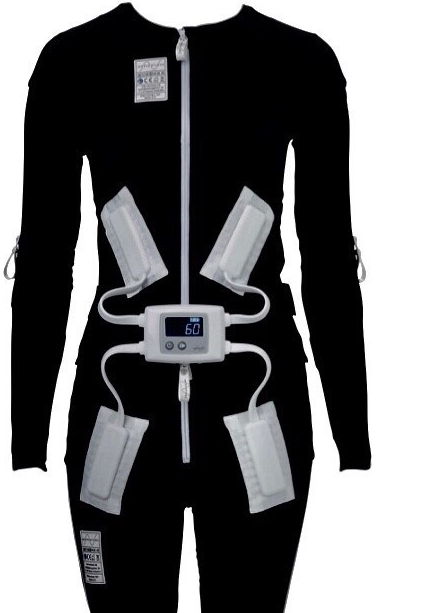
The Mollii suit provides a sensory-level transcutaneous electrostimulation (TENS) to all ‘selected’ muscle groups across the body via the 58 electrodes built in to the soft jacket and trousers. Following an assessment, a small control unit is programmed by the clinical specialist and the suit is worn for a one-hour session to observe the initial effects. The stimulation is understood to induce reciprocal inhibition by stimulating the antagonist muscles to the spastic muscles as well as giving sensory input to help the motor function output. The modulating effects on the nervous system are thought to occur through the activation of sensory afferent pathways which enter and are processed in the spinal cord and higher central neural circuitry. The Mollii Suit is a therapy suit that it is only ever used for an hour a day.

My Experience

My assessment for the Mollii Suit was conducted by two specialised physiotherapists and Richard Welch, Director of UK distribution of the Mollii suit.  Measuring all of my range of movements, the initial physiotherapy assessment was thorough. Identifying the muscles which would benefit from a reduction in spastic tone, the physiotherapists programmed the control unit of the Mollii Suit to target these. Richard walked me through the way the Mollii suit works and the theory behind stimulating the underactive muscles to counteract the tone in the opposite muscle. Before I put the suit on, I was videoed. This process was repeated after I had had the suit on for an hour, allowing direct comparisons to be made. It was thus clear to see how and if the Mollii Suit had reduced my tone or changed my walking pattern.

 A word of warning to those contemplating this assessment, steer away from the briefs or cycling shorts you would usually wear to physiotherapy as the 58 electrodes in the suit need to have direct contact with the skin, so wear some nice but tight-fitting underwear. The suit itself consists of two pieces, trousers and a top which have to be very close fitting. Indeed, three people had to help me on with the garment which is actually quite comfortable. After the suit is on and the electrodes are in the right places, the control unit, programmed by the physiotherapists, is attached to the suit and your hour of treatment begins. The electrical stimulation is not painful but can produce a slight tingling or stinging sensation occasionally.  Whilst the suit is activated you do not need to do any physio, you can just sit. This is not to say that the Mollii suit requires no effort on the part of the patient, the real work begins after your hour of electrical stimulation is up. In reducing my tone, the suit left me reliant upon my weaker muscles. The hope is by regularly wearing the suit I will be able strengthen my weaker muscles through frequent physiotherapy sessions so that these muscles are no longer completely dominated by their high-toned counterparts.

When the electrical stimulation started, my body began to feel very heavy, every movement felt as I imagine it would after having run a marathon. During the hour in which I was in the suit I had time to contemplate what I looked like in this skin tight black and white garment, which had a timer for a belt counting down the minutes I had left of treatment. While it is not the height of fashion, the suit could easily double as a Halloween costume. You could easily resemble a skeleton or you could always cut holes for your arms and legs out of a cardboard box with an extra hole where the timer is and masquerade as an oven.  If you wanted to transform into something a little more sinister you could always go as a bomb with your own inbuilt detonation count down.

After the hour had elapsed, videos were taken and I had another physio assessment, my tone seemed to have all but gone. I was left with jelly legs but the suit allowed me to get into positions that I never had before. I was able to lift my legs a little higher when I walked and my arms did not rise involuntarily every time I tried to do something which required any amount of effort. The Mollii suit had defiantly had an effect.

Anyone contemplating an assessment should note that the Mollii suit is meant to be used regularly. For me the effects of the suit lasted two days. During these two days my tone was reduced but I was also very weak. If I was to trial the suit using it regularly for a period of time this weakness could be improved through frequent physiotherapy sessions.   When my tone came back, it did so with a vengeance accompanied by a large amount of pain, both things I had had a brief reprieve from because of the assessment.  This is in no way meant to dissuade anyone from trialling the suit. It is an amazing piece of new technology that could really help some people.

How to get the Mollii Suit?

The Mollii suit has the potential to be the treatment I have been looking for but would need to be paired with a substantial amount of physiotherapy at least initially. It is non-invasive and you can easily adjust the amount of stimulation and treatment you need as your condition changes. Yet how do you get it? As a very new technology the Mollii suit is not available on the NHS. Professionals in the NHS have said that while indeed it might work, there is not enough research done on the suit for it to be funded. Instead one doctor recently told me to have an alternative invasive surgery because it would be free! This was very frustrating considering that this surgery would cost the NHS so much more than a month trial of the Mollii Suit.

 The Mollii Suit costs £4,100 to buy. However, it is advised that you first rent it for at least one or two months to ensure that the suit works for you. It costs £470 per month to rent a Mollii Suit along with a £2,500 deposit. These costs are fairly substantial but if paying for private physio like myself as the NHS does not have any neurological physiotherapists in my area, the expense soon becomes untenable. However, I am looking into possible ways I may be able to get some of my treatment funded. If you are interested in trying the Mollii suit, I had my assessment at Hobbs Rehabilitation, a private centre where I am currently having physiotherapy. The assessment cost £105 and took four hours.

More information about the Mollii Suit can be found via the links below:

http://inerventions.se/en/research/

http://www.remotion.co.uk/research

https://www.hobbsrehabilitation.co.uk/docs/LB_Mollii_MS_Trust_Poster_Sep2016_2.pdf

https://www.hobbsrehabilitation.co.uk/docs/Scott_Reed_Mollii_Poster.pdf


Gluten and Dairy free Brownies

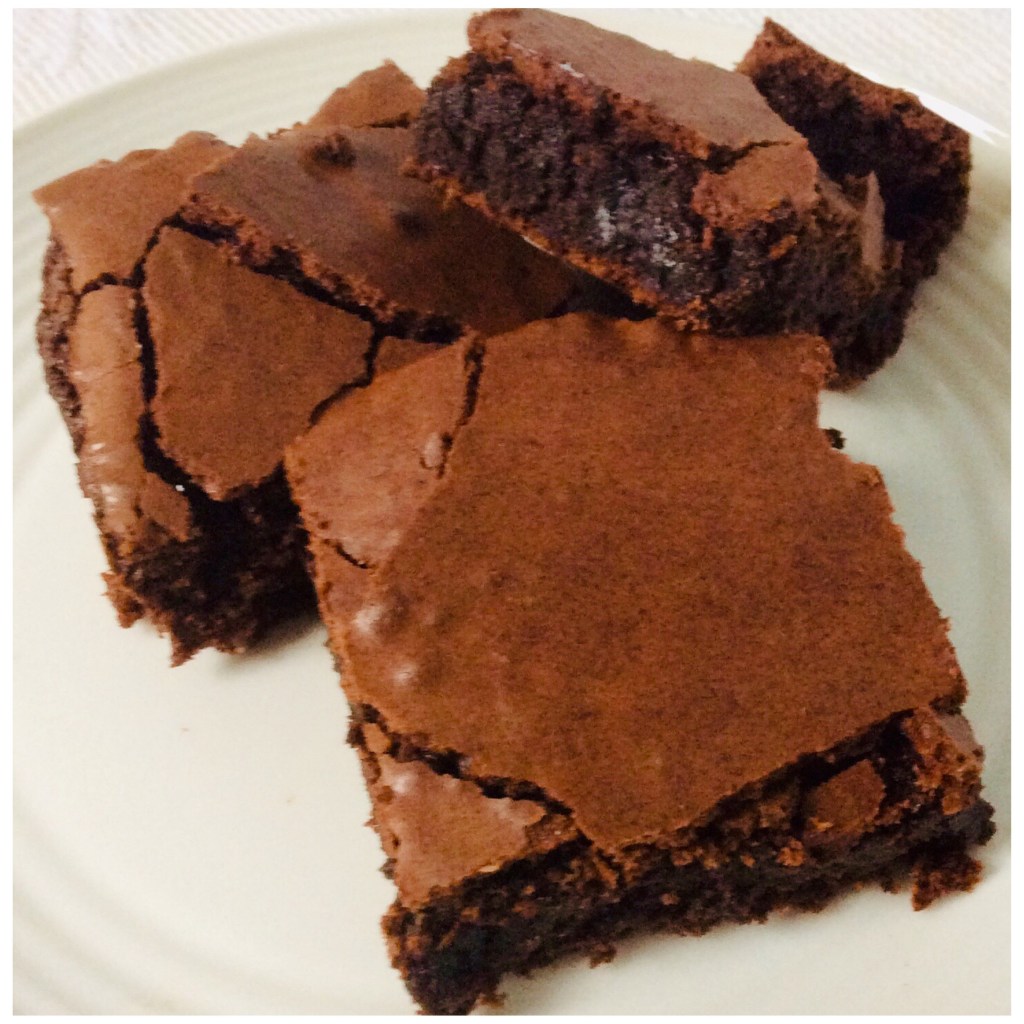
These devilishly dark brownies are simply perfect when catering for those with allergies or intolerances. Indulgent and gooey, these brownies are entirely scrumptious and moreish. Requiring only the smallest amount of gluten free-flour, these treats are fudgy and moist in texture with the thinnest layer of crunchy chocolate on top.

Ingredients

185g dairy free spread (I use Vitalite Dairy Free Spread)

185g 70% dark chocolate

80g of a gluten free flour mix

45g cocoa powder

100g dark chocolate chips

3 large eggs

275g caster sugar

Method  

  1. Break the dark chocolate into small pieces placing it into a medium microwave safe bowl with the dairy free spread. Put this bowl into the microwave for 30 second intervals. Make sure to stir the ingredients between each interval to prevent the mixture from burning as it melts together. Once the chocolate and spread have melted place to one side to cool.
  2. While you wait for the chocolate to cool, preheat your oven to 180C/ 160C fan/ gas 4 and prepare a 20cm square tin by lining it with non-stick baking parchment.
  3. Crack three large eggs into a large bowl.  Then add the caster sugar. With an electric mixer on maximum speed, whisk the eggs and sugar. Mix until the mixture becomes thick and creamy. This process can take up to 8 minutes, depending on how powerful your mixer is. You will know the egg and sugar mixture is ready when the mixture becomes pale and doubles in size.
  4. Pour the cooled chocolate mixture into the whipped eggs and sugar. Next gently fold the two mixtures together with a metal spoon. Cut into the mixture with your spoon, bringing the mixture that is underneath to the surface. Fold the mixture using a figure of eight movement.  Be careful to move the bowl round each time you fold and do so until the two mixtures are one in colour.
  5. Sieve your gluten-free flour and coco powder over the bowl of eggy chocolate mixture and fold until the mixture is uniform in colour and no flour is left unincorporated.
  6. Fold the dark chocolate chips into the mixture.  
  7. Pour the brownie mixture in to your prepared tin and place in the oven for 40 minutes.
  8. Once your brownies are out of the oven leave to cool completely before cutting.     

Note that some dark chocolate does contain traces of gluten
and some gluten free flour contains milk powder so be careful to ensure that all your ingredients are safe if you are catering for those with allergies.