

Harbouring little interest in the more sedate sports, I first sat in a rugby wheelchair at the tender age of 12 and since then I have loved the sport. Following several years break from the sport during my history degree, at 23 I’m now fully immersed in rugby training once more.
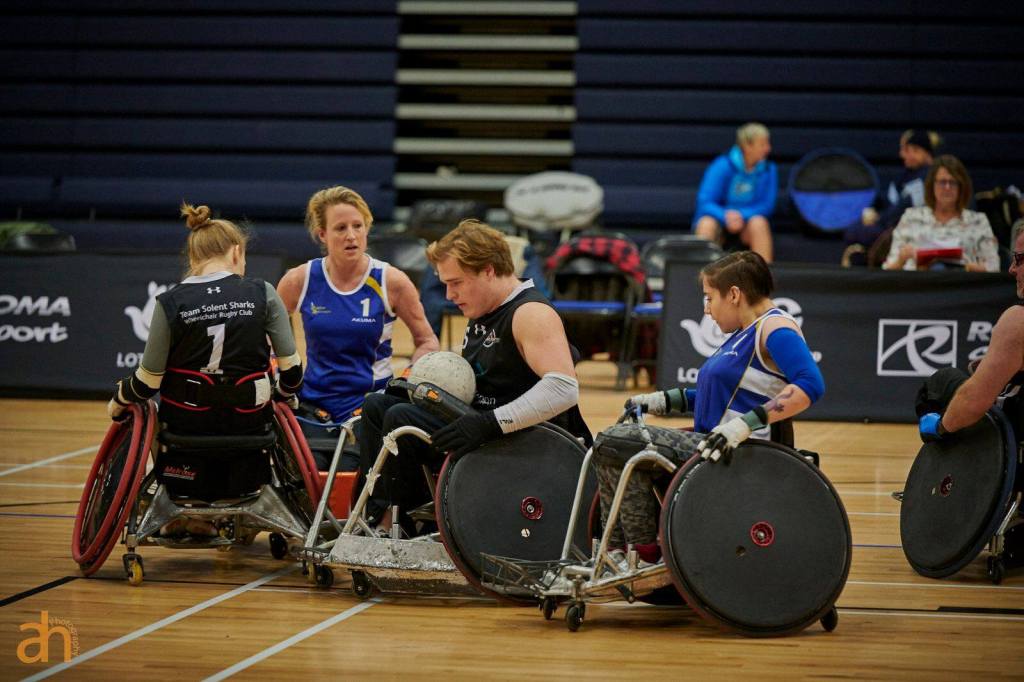
Whilst named Wheelchair rugby, the sport hardly resembles its namesake. Instead, it is a mixture of various different sports. There are no scrums, the game is played with a volleyball and passes can be directed forward.
Originally created for those who were not able enough to play wheelchair basketball, the most enticing element of wheelchair rugby is that fact that regardless of their function, each player is valuable in their own right. Each game is divided into four with each quarter lasting eight minutes. Each side has a team of four players. It is one of the only sports wherein those with lower function are viewed in a positive light. Every player is given a numerical point value reflecting their function. These values range from 0.5 to 4.0. The lower your function, the lower your points. Each team of four can only add up to 8 points. I myself recently got reclassified this year as my function had deteriorated, a slightly sad reality, yet this reduction in my points was viewed as a legitimate cause for celebration for everyone in the team and myself.
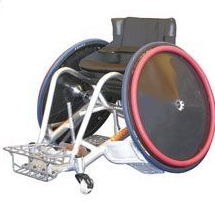
There are two types of rugby wheelchairs -defensive and offensive.
- The defensive chairs have a protruding metal triangular pick. By wedging this pick into the space between the wheels of your opponent’s chair, the defensive player can stop them from moving.
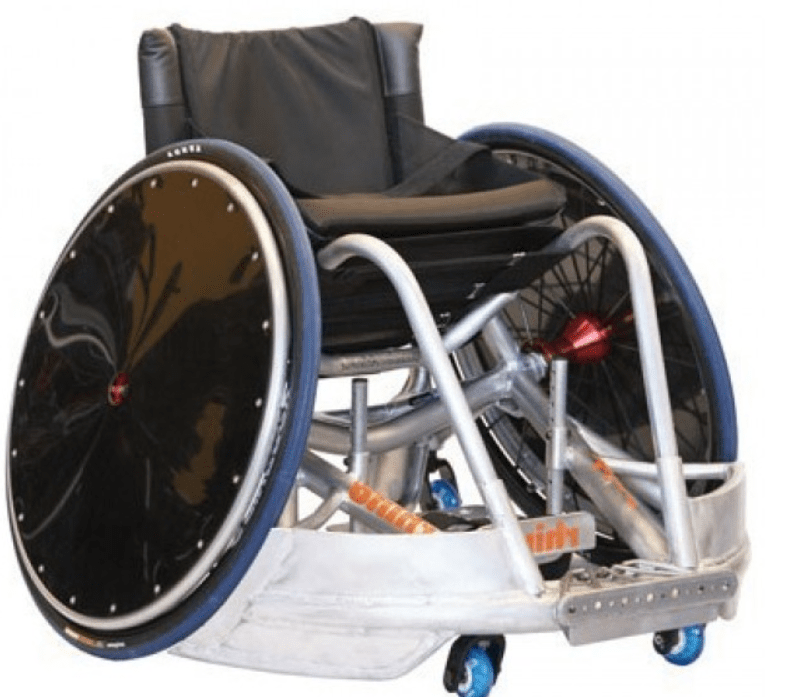
- On the other hand, offensive chairs resemble Daleks in shape and are usually used by high point players as they are more agile.
The basic rules are as follows:
- While ramming into other people’s chairs with your own is vital a skill needed to defend and attack your opponents, rugby is a noncontact sport. You cannot touch any of the other players.
- The ball must be bounced or passed every 10 seconds
- You have 12 seconds to get the ball out of your team’s half of the court
- The ball must be in your possession when you roll over the try line to score
- A team must score within 40 seconds of having possession of the ball
- You cannot go over and back the halfway line with the ball.
This sport is fiercely competitive as well as loads of fun. It also constitutes a serious cardiovascular workout. The camaraderie wheelchair rugby provides is amazing. To be among your peer group partaking in an aggressive and relatively dangerous sport despite your disability is somewhat liberating. Indeed, the power sport has to change the status of your mind, body and soul constantly leaves me in a state of awe. This power was once more demonstrated to me last week. Following a hellish day wherein my new FES walking equipment [functional electrical stimulation], for which I had just paid a little under £2000 had electrocuted me, I found myself muttering the phrase I will not get electrocuted tomorrow as I raced around the court. I mean, if you need to find an outlet for your pent-up frustration, why not play a sport that was originally called Murder Ball. While I started this particular session lamenting the day that had just past, I soon forgot about my stress.
If you’re interested in trying wheelchair rugby click on the link below to identify your local club https://gbwr.org.uk/find-a-club/

 Imy Steele